

Diamond Advisory provides a service of creating customized wedding bands. Set up an appointment with one of our Diamond Consultants.

Diamond Advisory sells as well rough diamonds, which are very difficult to reach because of Kimberley Certification System. Buy one and polish it whenever you decide about the shape. Engage yourself into the whole process.

Working with the microscope under VVS an upper quality diamonds.
Diamond Advisory provides a service of creating customized wedding bands. Set up an appointment with one of our Diamond Consultants.


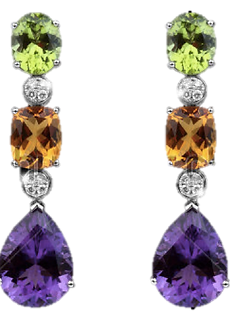
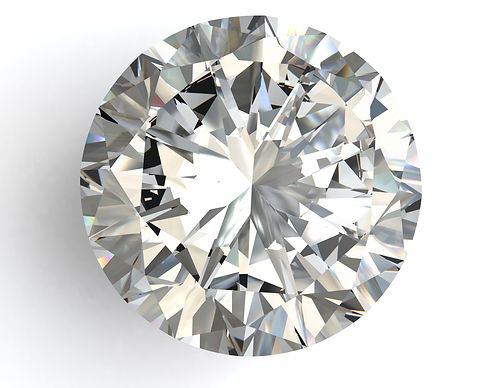
Diamond Advisory provides a certificate of authenticity for all of its creations; each one is unique and numbered, proving the origin of your jewel.
Diamonds that weigh over 0.20 carats have their own certificate, delivered by gemological laboratories such as the HRD (Antwerp Institute of Gemmology). This certificate acts as the diamond’s identity card: all of the stone’s characteristics, such as its weight, its cut or its provenance are stated on it.
Both of these certificates must be carefully stored away, particularly the second one as neither Diamond Advisory nor the HRD keep copies of it.
Diamond Advisory only selects diamonds whose color is superior or equal to the G grade. As for clarity, a Diamond Advisory diamond presents a minimum grade of VS, meaning it has no inclusions visible to the human eye.
Monika Zochowska the owner of Diamond Advisory and Certified Diamond Grader by HRD choose each diamond with the utmost care. The four criteria for selection, named the “4Cs” (cut, color, carat, clarity) are used to judge the quality of Diamond Advisory stones. Diamonds are selected among those with D, E, F and G color and IF to VS2 clarity. Moreover, Diamond Advisory choose cuts of the diamonds in the best possible way so as to offer stones that are sparkling and luminous.
Because each diamond is unique, like its wearer, each center stone in the Diamond Advisory engagement rings collection that is over 0.20 carats is certified by the HRD (Antwerp Institute of Gemology).
Sought after and admired, the diamond is outstanding in its rareness and exceptional sparkle. A symbol of purity, said to be invincible, it evokes eternal love above all. A timeless stone, the diamond never goes out of style.
This crystal, made of carbon, is defined by the four major “4C” criteria: these play an essential role in measuring the quality of the gemstone.
4 C's Guide
CUT
A diamond’s cut is chosen according to the stone’s original shape, its dimensions and inclusions. The diamond is cut so that its flat and polished facets are inclined at the best possible angle to reflect the light and give the stone its maximum fire and brilliance.
The round brilliant cut is the classic shape for the engagement diamond. But there are other cuts, each with its own character: the marquise, the oval, the pear, the emerald and the heart cut. Apart from the heart and emerald cut, all the other shapes have 58 facets.
These cuts have been designed so as to maximize the reflection of light on the stone’s facets: this way, the diamond shines and sparkles at its best.
CLARITY
Clarity defines the capacity of light to shine through a stone without any impediment or obstacle. To evaluate a diamond’s clarity, one has to define the number and position of the stone’s inclusions. Inclusions are structural elements that have occurred during the stone’s formation and affect its homogeneity.
They come in the shape of a crystal or solid body, a dot or cloud…Diamond clarity is graded thanks to an international classification that ranges from IF to SI.
COLOR
The color of a diamond is measured by an international grading system defined by the HRD and ranging from D to Z. A D color diamond is perfectly colorless whereas a Z color diamond is slightly yellow, making it dull and lifeless. The diamonds selected by Diamond Advisory are of the most exceptional quality: they are between D and G for dazzling sparkle.
Although white is the most frequent, there are over 300 different colors of diamonds: these are called “fancy” diamonds. It is thought that there is one fancy color diamond for every 10000th near colorless diamond: as they are very rare, these diamonds are considered to be miracles of Nature and are extremely sought after.

SAPPHIRE
Like the ruby, the sapphire - whose name comes from the Hebrew sappir meaning “the most beautiful thing” - is a variety of the corundum mineral and is made of aluminum oxide. Although the most frequent and sought after color is a vivid blue, intense and fascinating, there are also pink, yellow, orange, violet, green, and colorless sapphires.
Today, the sapphire is admired as a stone with a beauty which is soft, discreet and never ostentatious. The gift of a sapphire is the gift of an elegant and powerful stone and its deep color is at its most beautiful and sparkling in daylight.
Diamond Advisory is happy to advise clients in their search for an engagement ring that is original and has character and offers a selection of sapphires of all shapes and sizes.
Other Gem Stones
EMERALD
A member of the beryl mineral family, the emerald is defined by its incomparable green color with a hint of blue at its heart. The ideal color, which is both intense and even, not too light but not too dark, is very rare.
An emerald’s
CARAT
The carat is the standard measure used to give the weight of precious stones, including diamonds. One carat is worth 0.2 grams. The carat weight indicates the size of the stone but cannot be used alone to give a stone’s value: the three criteria described beforehand must also be taken into account. A diamond of superior quality can be any size.

transparency is also extremely rare and highly valued. Indeed, most of the time, the emerald contains a certain number of inclusions, that can be solids, liquids or gaz. A group of inclusions form what is referred to as the emerald’s “garden”. Far from being a fault, an emerald’s garden gives it distinctive character and accentuates its authenticity.
Most emeralds originate from Brazil today, but they can also be found in North America, Africa or Australia. Dating back 30 to 65 million years, Colombian emeralds are legendary for their unique beauty.
Because of its inclusions, an emerald is more difficult to cut and needs expert skill. It is in fact a science; the cut is determined by the shape of the crystal. All types of cuts are possible but the “emerald” cut enhances the unique qualities of the stone while the oval cut is the best to hide inclusions, thanks to its multiple facets. By playing with the number and positioning of facets, the stone-cutter can even change the color of the stone. The polishing and setting steps are also complex when it comes to the emerald and require real savoir-faire.
The emerald was once reputed to possess mystical powers. Today, its green color makes it a symbol of hope and renewal.
Mysterious and deep, the emerald is a captivating stone that draws you down into its garden. Wearing an emerald is a sign of refinement and discretion: the emerald’s beauty is not glaring. No two emeralds are alike.
Diamond Advisory provides the greatest care in selecting the most precious emeralds. It is none the less a fragile and delicate stone and we encourage you to consult our advice on how to care for your emerald and preserve its radiance. For those looking for an engagement ring that is full of character and distinctive style. We are happy to suggest a selection of emeralds of varying cuts, shapes and sizes.
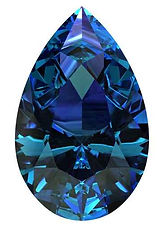
Sapphire mines vary greatly in location; most are situated in South East Asia (Myanmar, Sri Lanka, and Thailand) or in Australia, but also in Brazil or in Africa (Kenya, Nigeria, Tanzania…).
The sapphire was considered to be a talisman by many civilizations, capable of bringing peace to its owner. For the Persians, the sapphire was such an exact replica of the blue of the sky that is was thought to be the base on which rested the universe, magnificently reflecting its splendid color on the world.

RUBY
Like the sapphire, the ruby is a variety of the mineral corundum. It has a distinctive vivid red color. While rubies vary in shades of red, the most prized is the “pigeon blood” red; a rare deep red with a hint of blue. It is, moreover, a ruby’s color that defines its value, above its size or weight. A very rare gem, the ruby is the most valuable of all the precious stones, when comparable in carat weight.
When worn, the ruby’s sparkle comes alive with an inner fire that is enhanced by evening lighting. Its uniquely intense color is remarkable.
Diamond Advisory takes pride in selecting the most beautiful rubies. We are happy happy to advise clients in their search for an engagement ring that is original and has character and offers a wide selection of rubies of all cuts, shapes and carat weights.
Some rubies display a wonderful silky shine, the so-called 'silk' of the ruby. This phenomenon is caused by very fine needles of rutile and is sought after by connoisseurs.
Rubies are found in Myanmar (ex-Burma) - those of the Mogok valley are famously beautiful - Sri Lanka and Thailand. There are also smaller mines in Africa, Australia or in some North American states such as Montana or South Carolina.
The ruby is considered to be such a rare and exquisite stone that it is called “ratnaraj” in Sanskrit, which means “the king of precious stones”. It is a symbol of courage and victory, love and passion. The stone has lmong been for the adornment of monarchs only, and was linked to power and strength. Throughout the world it it considered to have protective powers.